Introduction
Among the many vibrant festivals of Nepal, Holi, locally known as Fagu Purnima, stands out as one of the most colorful and joyful celebrations. Observed in the month of Falgun (February–March) on the full moon day, Holi marks the arrival of spring and the triumph of good over evil.
Celebrated throughout Nepal—from the hills of Kathmandu to the plains of the Terai—Holi is a festival where people forget social boundaries, forgive past misunderstandings, and celebrate together with colors, water, music, and laughter.
Unlike deeply ritualistic festivals such as Dashain or Tihar, Holi is primarily a festival of joy, friendship, and community harmony, though it has strong mythological and religious foundations rooted in Hindu tradition.
Mythological Origin of Holi
The celebration of Holi is closely linked to the story of Prahlad, Hiranyakashipu, and Holika.
The Story of Prahlad
According to Hindu mythology:
- Hiranyakashipu was a powerful demon king who wanted everyone to worship him.
- His son Prahlad, however, was a devoted follower of Lord Vishnu.
- Enraged by his son’s devotion, the king tried multiple times to kill him.
Holika, the king’s sister, had a magical shawl that protected her from fire. She tricked Prahlad into sitting on her lap in a burning fire. But due to divine intervention:
- Holika was burned to ashes.
- Prahlad remained unharmed.
This event symbolizes the victory of faith and righteousness over arrogance and evil.
Holika Dahan – The Night Before Holi


4
On the night before Holi, people gather to perform Holika Dahan (burning of Holika).
Ritual Significance
- Bonfires are lit in open spaces.
- People offer prayers and grains into the fire.
- The fire symbolizes burning negativity, ego, and evil.
In Kathmandu, a ceremonial wooden pole called Chir is erected at Basantapur Durbar Square several days before Holi. The removal and burning of Chir mark the beginning of the color celebration.
The Day of Colors


4
The main celebration begins in the morning.
Activities Include:
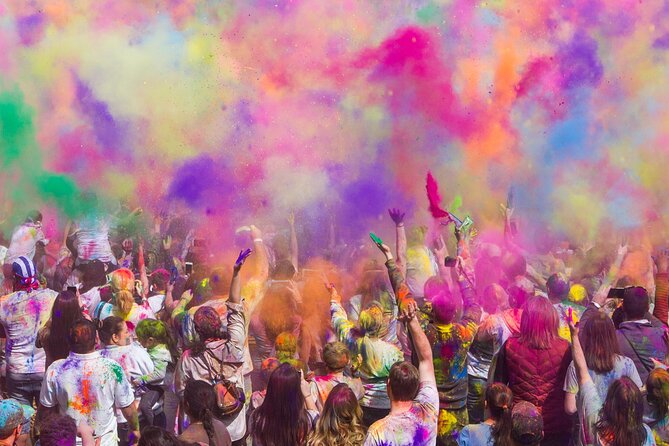
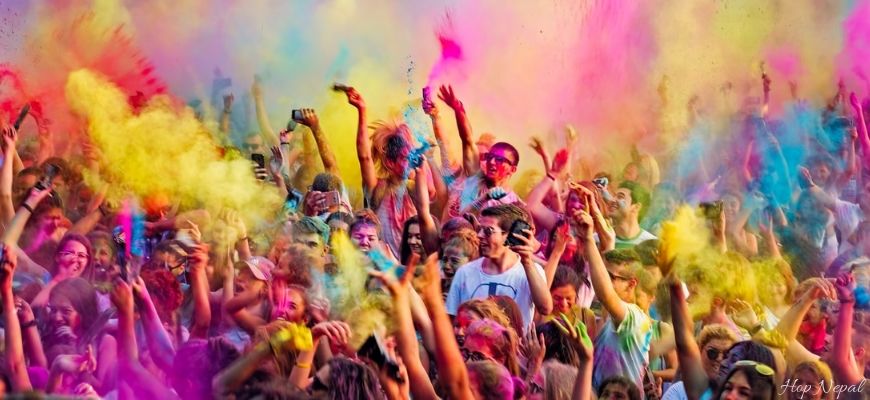
- Throwing colored powder (Abir)
- Spraying colored water
- Using water balloons (Lola)
- Dancing to music
- Visiting friends and relatives
Children eagerly wait on rooftops to throw water balloons at passersby, while adults gather in community spaces to celebrate with music and laughter.
The colors represent:
| Color | Meaning |
|---|---|
| Red | Love and passion |
| Green | New beginnings |
| Yellow | Prosperity |
| Blue | Divine energy |
Regional Differences in Nepal
Holi is celebrated on different days:
- Hilly regions (Kathmandu, Pokhara, etc.) – First day
- Terai region (Janakpur, Birgunj, etc.) – Second day
In the Terai, celebrations are often grander and more musical, influenced by Mithila and North Indian traditions.
Religious Significance
Holi is also connected to Lord Krishna and Radha.
The playful tradition of applying colors comes from the stories of Lord Krishna applying colors to Radha and the Gopis in Vrindavan.
This symbolizes:
- Divine love
- Playfulness
- Unity beyond social divisions
Social Importance
Holi breaks barriers of:
- Age
- Gender
- Social class
- Caste
On this day, everyone becomes equal under colors.
People:
- Forgive past disputes
- Reconnect with friends
- Strengthen community bonds
It is one of the few festivals where laughter and playfulness are considered sacred.
Holi in Kathmandu Valley
Kathmandu Durbar Square becomes a vibrant center of celebration.
Tourists from around the world gather to experience:
- Traditional music
- Street dancing
- Cultural vibrancy
The festival boosts tourism and local businesses.
Environmental and Modern Awareness
In recent years, there has been awareness about:
- Using natural colors instead of chemical ones
- Avoiding excessive water waste
- Respecting consent while applying colors
Responsible celebration is increasingly promoted in schools and media.
Economic and Tourism Impact
Holi attracts:
- Domestic tourists
- International visitors
- Photographers and travel bloggers
Hotels, restaurants, and street vendors benefit significantly during this time.
Philosophical Meaning
Holi teaches a simple yet profound lesson:
Life should be celebrated with color and joy.
Winter represents dullness and stagnation.
Spring represents rebirth and hope.
By covering each other in color, people symbolically say:
- Differences do not matter.
- Unity is beautiful.
- Love overcomes ego.
Comparison with Other Nepali Festivals
| Festival | Focus |
|---|---|
| Dashain | Victory of good over evil |
| Tihar | Light and devotion |
| Maghe Sankranti | Solar transition and health |
| Holi | Joy, unity, and divine love |
While Dashain is family-centered and Tihar is ritualistic, Holi is open, public, and playful.
Challenges in Modern Times
Urbanization has changed the nature of celebration:
- DJ parties replace traditional music
- Water balloons sometimes cause injuries
- Some misuse intoxication
However, communities continue to promote respectful celebration to preserve cultural values.
Cultural Symbolism
Holi symbolizes:
- End of winter
- Beginning of spring
- Burning of evil (Holika)
- Devotion (Prahlad)
- Divine love (Krishna and Radha)
- Social harmony
Few festivals combine mythology, nature, joy, and spirituality so beautifully.
Conclusion
Holi, or Fagu Purnima, is one of Nepal’s most energetic and heartwarming festivals. Rooted in ancient mythology and seasonal change, it celebrates the victory of devotion over evil and the arrival of spring’s warmth.
From the lighting of Holika Dahan to the playful throwing of colors, Holi brings people together in laughter and forgiveness. It dissolves barriers and reminds society that life is meant to be celebrated.
In a world often divided by differences, Holi paints a simple yet powerful message:
Under the colors, we are all one.
As Nepal welcomes spring with vibrant hues, music, and shared sweets, Holi continues to spread joy across generations — making it one of the most beloved festivals of the nation.