
The Sacred Turning of the Sun and the Beginning of an Auspicious Season
Introduction
Nepal is a land where festivals are closely connected with nature, seasons, agriculture, and spirituality. Among the many seasonal festivals celebrated throughout the country, Maghe Sankranti stands as one of the most ancient and universally observed festivals. Unlike community-specific celebrations, this festival is celebrated by almost all ethnic groups of Nepal — from the hills to the Terai — though customs vary by region.
Maghe Sankranti falls on the first day of the Nepali month Magh (mid-January), marking the transition of the Sun from Sagittarius (Dhanu) to Capricorn (Makar). Because of this, it is also known as Makar Sankranti in Sanskrit tradition.
For Nepalis, the festival symbolizes:
- The end of harsh winter
- The beginning of warmer days
- A time for purification and healing
- Renewal of health, strength, and prosperity
It is therefore both a religious and seasonal health festival, deeply tied to traditional knowledge about food, climate, and body balance.
Astronomical and Religious Significance
Maghe Sankranti is based on the solar calendar, unlike many Nepali festivals that follow the lunar calendar.
The Solar Transition
On this day the Sun begins its northward journey known as Uttarayan.
According to Hindu belief:
- Uttarayan is the daytime of the gods
- Dakshinayan (previous six months) is the nighttime of the gods
Thus Maghe Sankranti marks the beginning of an auspicious half of the year.
It is believed that any good deed performed after this day brings multiplied merit.
Mythological Importance
In Hindu scriptures, the day is associated with several stories:
Bhishma Pitamah’s Liberation
In the Mahabharata, the warrior Bhishma waited for Uttarayan to leave his body because souls departing during this period attain moksha (liberation).
Vishnu and the Demons
Another belief says Lord Vishnu defeated demons and buried their heads under Mandara mountain on this day — symbolizing victory of light over darkness.
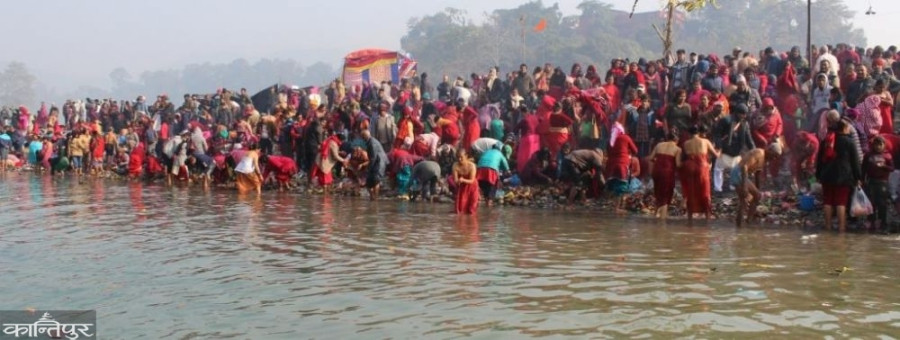
Ritual Bathing at Sacred Rivers


4
Early morning bathing in holy rivers is the most important ritual.
Popular pilgrimage sites:
- Devghat (Chitwan/Tanahun) – largest gathering
- Triveni Dham (Nawalparasi)
- Kali Gandaki River
- Koshi Barrage
- Narayani River
Bathing is believed to wash away sins and diseases and prepare the body for seasonal change.
Many elderly devotees stay overnight near rivers despite the cold, showing deep faith.
Traditional Foods and Health Science


4
Maghe Sankranti is also known as the festival of nutritious winter foods. The foods eaten on this day are not random — they are based on Ayurvedic seasonal wisdom.
Main Foods
| Food | Benefit |
|---|---|
| Til (Sesame seeds) | Provides heat & energy |
| Chaku (molasses candy) | Strengthens body |
| Ghee | Lubricates joints & skin |
| Tarul (yam roots) | Improves digestion |
| Sweet potatoes | Boost immunity |
| Khichadi | Balanced nutrition |
The festival teaches people how to adapt diet according to climate — a remarkable example of traditional health science.
Celebration Among Different Communities
Although widely celebrated, each ethnic group has unique traditions.
Tharu Community – Maghi (New Year)


4
For the Tharu people of the Terai, Maghe Sankranti is actually their New Year festival called Maghi.
Special practices:
- Community meetings
- Choosing village leaders
- Settling disputes
- Family feasts and dances
It is their biggest cultural festival — comparable to Dashain for others.
Hill Communities
In hill regions:
- Families gather at home
- Elders bless children
- People visit relatives
- Food sharing strengthens relationships
Domestic Rituals
Oil Massage
People apply mustard oil before bathing.
This protects skin from winter dryness and improves circulation.
Charity and Donation
Giving food and clothes to the poor is considered highly auspicious.
It symbolizes warming others during the cold season.
Cultural Meaning
Maghe Sankranti represents harmony between astronomy, agriculture, and health.
It teaches that humans must live according to seasonal rhythms.
Key cultural messages:
- Respect natural cycles
- Maintain physical health
- Strengthen family bonds
- Begin new work with positivity
Agricultural Importance
The festival occurs after the harvest season. Farmers finally rest after months of labor.
It becomes a time for:
- Social gatherings
- Community meals
- Planning next cultivation season
Thus it is both a harvest thanksgiving and seasonal preparation festival.
Scientific Interpretation
Traditional Nepali practices align with modern science:
Why oily and sweet foods?
During winter:
- Body loses heat
- Skin becomes dry
- Energy requirement increases
Foods like sesame, ghee, and molasses provide:
- Healthy fats
- Iron
- Minerals
- Warmth
Hence the festival functions as a traditional nutritional therapy.
Maghe Sankranti in Modern Nepal
Today people celebrate by:
- Visiting temples
- Traveling to Devghat mela
- Family gatherings
- Preparing traditional dishes
Urban families may not follow all rituals, but food traditions remain strong.
Comparison with Other Sankranti Festivals
| Region | Name |
|---|---|
| Nepal | Maghe Sankranti |
| India (North) | Makar Sankranti |
| Tamil Nadu | Pongal |
| Assam | Magh Bihu |
All celebrate the Sun’s transition and harvest cycle — showing shared ancient agricultural civilization.
Philosophical Meaning
Maghe Sankranti teaches a profound message:
Just as the Sun moves toward longer days, human life must move toward light and wisdom.
Cold winter represents hardship.
Warmer days represent hope.
The festival encourages people to leave laziness and begin active life.
Tourism and Devghat Mela
Devghat becomes a massive spiritual fair:
- Thousands of pilgrims
- Temporary markets
- Religious discourses
- Cultural programs
The festival supports the local economy and preserves pilgrimage traditions.
Environmental Wisdom
Eating seasonal local foods like yam and sesame promotes biodiversity and sustainable farming.
Thus the festival quietly promotes ecological balance.
Conclusion
Maghe Sankranti is not merely a religious ritual but a perfect blend of astronomy, health science, agriculture, and spirituality. It marks the cosmic movement of the Sun, the healing of the human body, and the warming of social relationships.
From sacred river baths to sesame sweets and Tharu Maghi celebrations, the festival reflects Nepal’s deep connection with nature’s rhythms.
In essence, Maghe Sankranti celebrates a universal truth:
After every cold darkness, warmth and light always return.
By welcoming the Sun’s northward journey, Nepalis symbolically welcome hope, health, and new beginnings into their lives — making Maghe Sankranti one of the most meaningful seasonal festivals of Nepal.